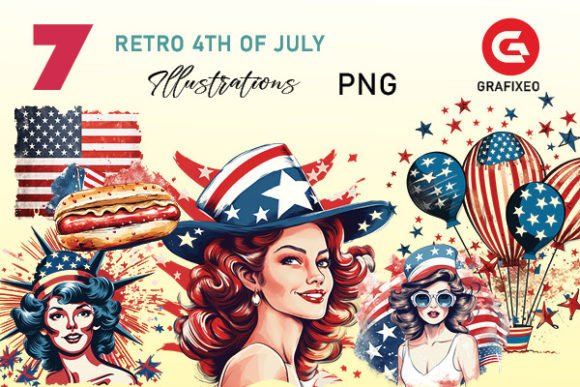
Retro 4th of July Illustrations: Vintage Charm for Modern Projects
There’s a certain warmth to vintage Americana—the faded colors of old parade posters, the playful imperfections of mid-century graphics, the nostalgic pull of a bygone era. It’s a visual language that feels both familiar and timeless. When you need to tap into that sentiment for a project, especially around Independence Day, generic modern graphics often fall flat. They lack the authentic character and handcrafted feel that makes retro design so appealing. This is where a thoughtfully curated set of Retro 4th of July Illustrations becomes an invaluable design asset, offering a direct line to that classic, celebratory aesthetic.
Understanding the Visual Language of Retro Americana
The appeal of these illustrations lies in their specific stylistic DNA. Think of the bold, simple shapes and limited color palettes of 1950s and 60s print design. The illustrations often feature iconic symbols—eagles, stars, fireworks, bunting, and Uncle Sam—rendered with a distinctive hand-drawn quality. You’ll notice slightly worn edges, subtle texture overlays that mimic aged paper or screen printing, and color schemes dominated by classic reds, whites, and blues, sometimes accented with creamy yellows or muted grays. This isn’t a sterile, vector-perfect style; it’s one with personality, suggesting authenticity and a connection to tradition. The overall effect is celebratory without being overly loud, nostalgic without feeling dated.
This style functions as more than just decoration; it sets a clear tone. For a small business owner creating a holiday sale graphic, it communicates heritage and reliability. For a blogger designing a party invitation, it establishes a fun, festive, and slightly whimsical mood. The illustrations act as powerful brand identity touchpoints, especially for brands that value tradition, craftsmanship, or a sense of community.
Practical Applications Across Your Creative Workflow
The true value of a versatile clipart set is measured by how many projects it can enhance. A high-quality collection of Retro 4th of July Illustrations seamlessly integrates into numerous contexts, saving you time and ensuring visual consistency.
- Digital & Social Media: Use individual elements as spot graphics in Instagram Stories, create engaging Pinterest pins, or design eye-catching Facebook event covers. The style is inherently scroll-stopping and works perfectly for social media graphics that need to convey a quick, festive message.
- Print & Editorial Design: These assets are ideal for editorial design in newsletters, blog post headers, or magazine layouts covering holiday recipes, party planning, or historical features. They add visual interest without competing with body text.
- Packaging & Product Design: For entrepreneurs, incorporating these illustrations into packaging design for seasonal products—from barbecue sauces to craft beers—immediately signals a limited-edition, celebratory release. They can also be used on hang tags, stickers, or thank-you cards.
- Crafts & Personal Projects: This is where the fun really begins. The PNG format makes them perfect for digital scrapbooking, creating custom invitations in Canva or Adobe Express, designing printable party decorations, or adding a festive touch to personal photo books.
- Branding & Marketing Materials: A single, well-chosen illustration can become a recurring motif in a holiday marketing campaign, used on website banners, email headers, and digital ads to create a cohesive and recognizable visual thread.
Integrating Retro Assets with Modern Typography
A common challenge is pairing vintage graphics with contemporary type. The goal is harmony, not competition. The hand-drawn, illustrative nature of these clipart pieces pairs best with typefaces that offer contrast or complement. Avoid pairing them with overly ornate or complex script fonts that can create visual clutter.
For a clean, balanced look, consider a sturdy sans serif font for your headlines. Its geometric simplicity provides a solid foundation that lets the detailed illustrations shine. A classic, readable serif font for body copy can echo the traditional feel without feeling outdated. If you want to lean into the vintage vibe, a handwritten font or a display font with a retro sensibility can work, but use it sparingly—perhaps just for a short headline or a call-to-action—to maintain readability. Always test your font pairing with the actual illustrations to ensure the hierarchy is clear and the overall design feels unified.
Selecting and Using Your Clipart Set Effectively
Not all clipart is created equal. When evaluating a set, look for quality indicators that signal a professional design asset. First, check the file formats. PNGs with transparent backgrounds are essential for flexibility, allowing you to layer illustrations over any color or photo. Second, assess the resolution. High-resolution files ensure your graphics remain crisp in both web design and print applications. Third, review the variety within the set. A good collection should offer a range of standalone elements (like a single star or firework) and more complex compositions (like a full banner), giving you options for different layout needs.
From a practical standpoint, organize the files in a dedicated folder on your system. When you import them into your design software, you can easily browse and select the right piece for your project. Remember to consider the commercial license. For designers, marketers, and small business owners, ensuring the assets are cleared for commercial use is non-negotiable. This protects your work and your client’s projects.
Ultimately, a set of Retro 4th of July Illustrations is more than just a collection of images. It’s a toolkit for evoking a specific, beloved aesthetic quickly and effectively. It allows you to infuse your projects with the warmth of nostalgia, the joy of celebration, and the authenticity of vintage design—whether you’re crafting a personal invitation or building a seasonal campaign for a brand. The right assets don’t just decorate; they communicate, connect, and elevate the entire creative endeavor.