Visualizing a Sustainable Future with Vector Art
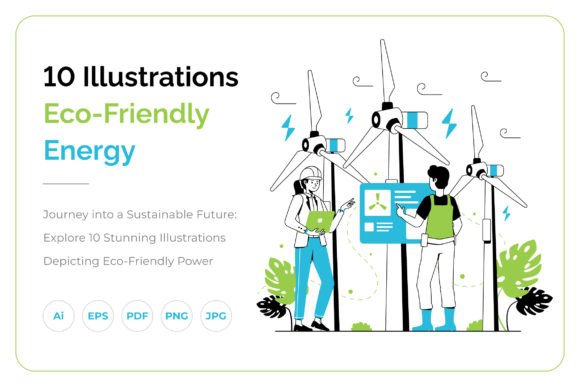
In the world of design, we are constantly searching for assets that not only look good but also communicate a clear, powerful message. When the topic is sustainability, green energy, or environmental innovation, the visual language needs to be precise. Generic stock photos often fail to capture the specific nuance of "clean energy." This is where specialized Renewable Energy Concept Illustrations become an indispensable part of your toolkit. This collection is not just a random assortment of pictures; it is a cohesive set of 10 distinct scenes designed to tell the story of solar, wind, and sustainable power through modern vector graphics.
The Anatomy of the Collection
At its core, this package is built on the principle of flexibility. As a designer, I value vector files above almost anything else because they allow for infinite scalability without pixelation. These illustrations are 100% vector-based, meaning you can scale them up for a billboard or down for a favicon without losing quality. The visual style leans towards a modern, flat aesthetic with subtle gradients and thoughtful color palettes that evoke nature and technology working in harmony. It avoids the overly "cartoonish" look that can sometimes undermine a professional brand, striking a balance between approachable and corporate.
The package includes ten specific scenes. These aren't just static icons; they are contextual setups showing wind turbines, solar panels, electric vehicles, and industrial integration. For a content creator or marketer, this context is vital. Instead of just showing a lightbulb to represent "energy," you can show the source of that energy. The personality of the artwork is clean, optimistic, and forward-thinking. It speaks to a demographic that cares about the future, making it perfect for brands that want to position themselves as leaders in sustainability or innovation.
Practical Applications for Modern Brands
Understanding where these illustrations fit into your workflow is key to getting the most value out of them. For web design, these assets are gold. They work beautifully as hero images for landing pages, breaking up long-form blog posts about ESG (Environmental, Social, and Governance) strategies, or visualizing data in infographics. Because the files are editable vectors, you can easily tweak the colors to match your specific brand identity hex codes, ensuring total consistency across your digital presence.
For those involved in packaging design or editorial design, the utility extends further. Imagine a magazine feature on "The Future of Cities"—these scenes provide the perfect accompaniment to articles on urban planning. Small business owners in the tech or energy sector can use these for social media graphics, creating a cohesive feed that reinforces their expertise. The illustrations are designed to work well at various aspect ratios, making them adaptable for Instagram stories, LinkedIn banners, or Twitter headers. Even for educational publishers, these vectors serve as excellent visual aids for textbooks or digital learning modules.
Enhancing Visual Hierarchy and Engagement
Good design is about guiding the viewer's eye. When you incorporate high-quality design assets like these illustrations, you immediately improve the visual hierarchy of your layout. A well-placed vector scene can anchor a page, drawing attention to a specific call-to-action or headline. In the context of brand perception, using polished, modern typography and imagery signals professionalism. It tells your audience that you pay attention to details and that you take your message seriously.
There is also the aspect of emotional engagement. The subject matter—clean air, renewable resources, green technology—carries an inherent positive association. By leveraging these visuals, you transfer some of that positive sentiment to your own project. Whether you are designing a pitch deck for investors or a brochure for a community event, these illustrations help create a narrative of hope and progress. They move your content away from abstract concepts and ground it in recognizable, relatable imagery.
Technical Specifications and Workflow Integration
From a technical standpoint, the compatibility of this pack is robust. It includes Adobe Illustrator files, EPS files, PDFs, and even a Figma file. This broad range ensures that whether you are a traditional print designer using legacy software or a UI/UX designer working in modern cloud-based tools, you can integrate these assets seamlessly. The inclusion of PNG and JPG files also makes it easy for non-designers—like bloggers or social media managers—to use the visuals without needing to open complex vector software.
One of the standout features is the editability. You aren't locked into a specific composition. If you like the wind turbine in one scene but the background of another, you have the freedom to mix and match elements. This modularity extends the lifespan of the product; you won't run out of ideas quickly because the combinations are nearly endless. It is a practical solution for agencies or freelancers who need to produce a high volume of content for clients in the green tech space.
Strategic Design Recommendations
When incorporating these illustrations, consider the surrounding typography. Because the illustrations are detailed, they pair best with clean, legible typefaces. A geometric sans serif font often complements the modern aesthetic of the vectors, maintaining a crisp, uncluttered look. Avoid overly ornate or heavy script fonts that might compete with the complexity of the illustrations.
Think about color harmony. While the default colors are likely set to a standard palette, adjusting them to fit a specific brand identity can make the content feel custom-made. If your brand uses deep blues and teals, shifting the illustration tones to match will create a seamless integration between text and image. Also, pay attention to negative space. These scenes are descriptive, so giving them room to breathe on the page prevents the layout from feeling cluttered. Use them to support your message, not overpower it.
Finally, remember that while these are premium font and asset resources, they are tools to be used. Don't just let them sit in a folder. Test them in your next presentation, your next blog header, or your next client proposal. The ability to visualize complex concepts like renewable energy instantly elevates the perceived value of your work. It demonstrates a commitment to quality and a grasp of current global trends that resonates with modern audiences.